

Transportation Operations System

The business need
A transportation operation depended on repeated manual checks across ride opportunities, routes, traffic, flights, driver availability and existing commitments. Information was spread across tools, and important decisions relied on the operator remembering the right rules under time pressure.
My contribution
I learned the day-to-day workflow, defined the operating rules and exceptions, and designed how the tools should work together. I directed AI-assisted implementation, reviewed outputs with the operational context in mind, and validated the business behavior. I also defined which actions could run automatically and which needed human review.
What was implemented
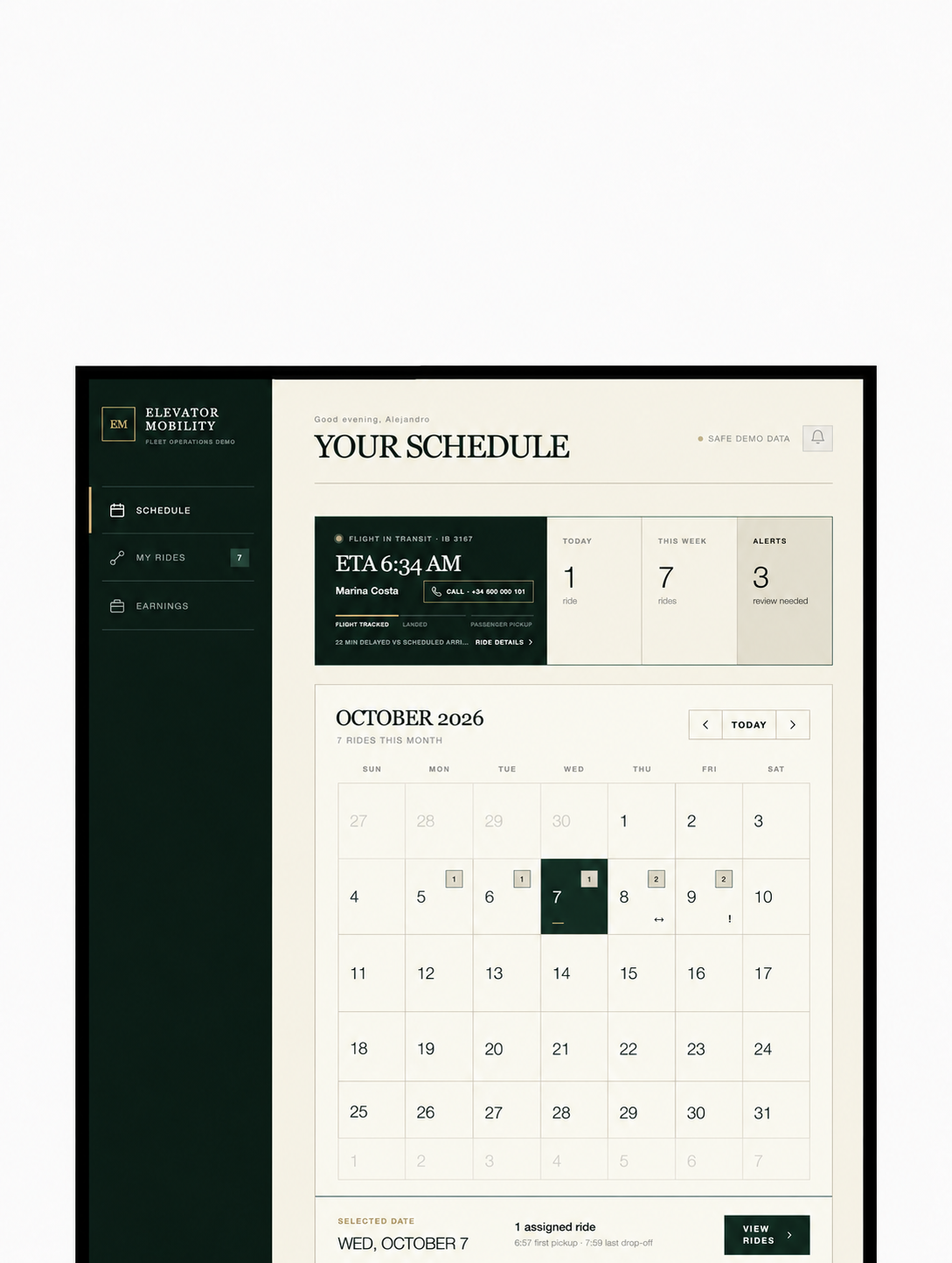
A connected operations system for monitoring rides, evaluating timing and schedule conflicts, checking operating constraints, routing notifications and maintaining operational records. An authenticated, mobile-first driver portal gives each driver access to their own schedule and relevant ride information. The implementation includes monitoring, backups and recovery procedures, with human control retained for uncertain or consequential decisions.
The result
The system is deployed and used in real operations, consolidating previously fragmented information and supporting work that required repeated manual attention. The demonstrated result is a functioning workflow with explicit rules, controlled automation and a driver-facing experience. Time savings, revenue gains and other quantified business improvements have not been measured.
The screenshot shows the actual driver portal interface in its Elevator Mobility showcase mode, using hypothetical trips and demo identities. No production passenger data or private operating details are shown.

Related Projects


elevator
lab

